with Lisa Clark – the Corporate Partners Program Manager for Lucile Packard Children’s Hospital Stanford
https://www.raisingwithlisaclark.com/

Average Donor Retention Rate in the U.S. is 45%
– so 55% will NOT give a 2nd gift.
Step 1: Processing The Gift
Donor Tracking System (A MUST)
It does the work for you. Yes, you will have to get into your donor mgt system, and you will have to do some maneuvering to get it to work the way you want, but it will be a great investment of time
Automated Gift Receipt (21st Century Time!)
There can’t be any delay. One of the non-profits she works for got an automated donor system, and migrated over 4000 names, and it saved them so much time when thanking the donors! She relies HEAVILY on her donor management system.
Handwritten or Personal Letter or Call
A Donor Gift Processing or Policy System – some time of in house plan or map that instructs the team as to what to do when a gift comes in.

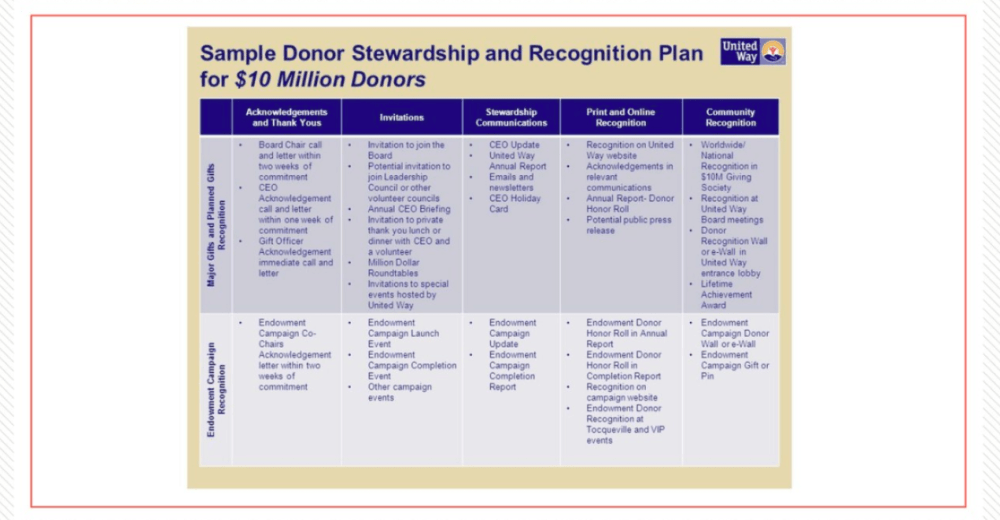
Tips for Step 1:
- Don’t overlap your efforts
- (thank you note mailed the same week as sending annual appeal letter)
- Gift Segmentation
- a system to strategically thank your donor and segment them by gift size
- Frequency of the gift
- create a cadence for this throughout the year
Just Sayin’
Donor Stewardship is not only about thanking your donors,
it’s also about honoring them
Step 2: Spaces and Places to Tell the Story
Annual Report
- be SURE to get their approval before using their names
- if they don’t want their name shared, don’t leave them out of the report! Just list them as Anonymous.
Just Sayin’
The #1 best way to Steward a Gift is to
USE IT EXACTLY
for the reason intended by the donor.
Newsletter, Website, Social Media
- Dedicate an entire page on your website to those who have donated to your organization.
- Have a donor spotlight page in your newsletter.
- Get them out there, show them off! It’s something to be proud of, and your donors will be proud of it too!
Corporate grants should be highlighted in social media.
- And/or, do an interview with an individual donor (meaningful donor story, where they tell why they gave to your organization) and post on social media.
Gift acknowledgement Letter and/or Thank You Letter
- drop data pieces into your letters. i.e. “Thanks to you collectively, we are able to do X,Y,Z…”
- Use your board members to do the thanking if you have a small or very small staff.
- Have the board members do 1-2 months of the year.
- Use the donor management system to organize with a branded thank-you note.
- Lisa emphasizes again how IMPORTANT it is to have a donor management system.
- Network for Good was designed for the small non-profit – even with a staff of ONE PERSON it works, and it can be customized. There are other systems too.
Donor Wall/Timeline Wall
- While Lisa was at one of the non-profits where she’s worked, the company had a Donor Wall, with picture frames, for individuals and corporate donors.
- Great way to highlight them in a space where people visit your organization.
- One place she worked had a Timeline Wall, starting with the very first donor ten years prior.
- It showed significant things that happened to the organization, showing branding development, too, for example…
- It is fun for your organization to see where they have been.
- Lisa recommends the Timeline Wall.
Recognition Activities
If you have a board member who has access to events, have them invite the donors to these special events. It “pulls the donors in closer to your organization.”
- sports
- performing arts
- lunches with donors who gave scholarships to an organization
- unusual: a private tour of an unoccupied location in a juvenile hall/place of incarceration where donors had provided educational opportunities to the students.
Tips for Step 2
Volunteer Experiences Unique to the Giving Level
Personalize Your Interactions
- Share Articles of Interest with your donors, with your thank you note, or forwarding them emails in addition to your thank you email
Survey Donors:
- This is another thoughtful way to show them that you care about them.
- “Would you like to learn more about policy? Are there any unique experiences that we can offer that you would like to be a part of?”
- When you create these experiences, you are putting donors next to donors, who are there for similar reasons, and this can create donor bonding.
Step 3: Events, Societies, and Clubs….Oh My!
Donor Stewardship Events
- coffee, tea and dessert at a donor’s home
- you don’t want them to think that you are spending their money on lavish events so keep it simple and personal.
Societies
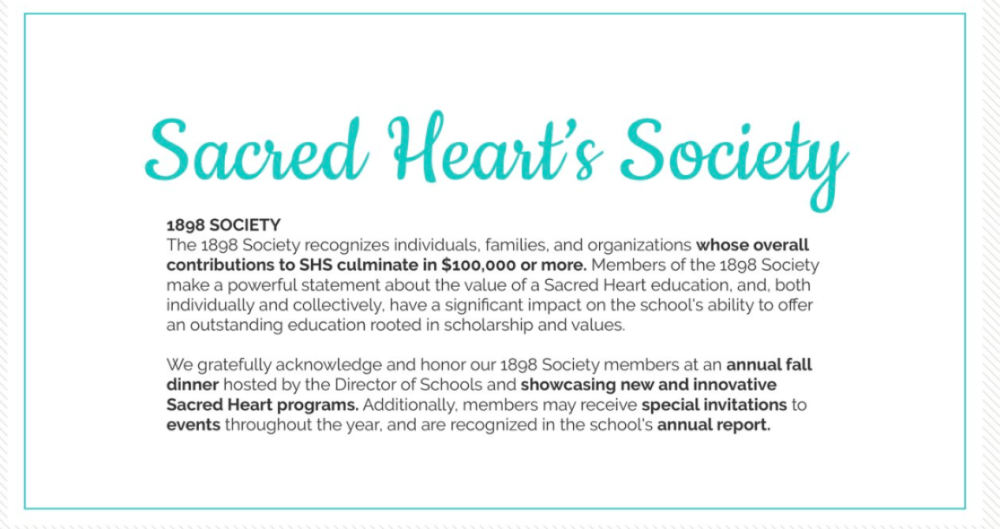
Sacred Heart Society had an 1898 Society who recognized families who had contributed a cumulative gift of over $100,000K across generations.
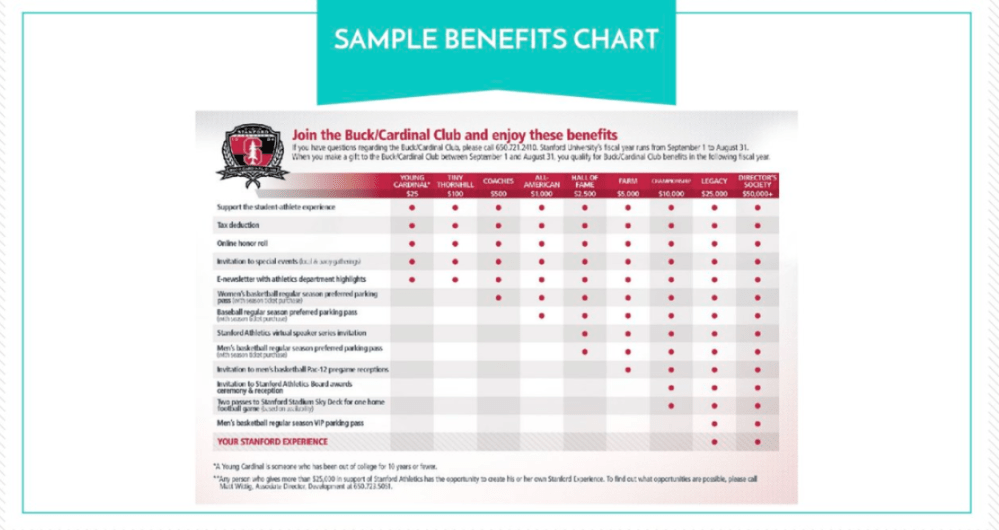
Below: another example of a society or club at Stanford U that accepts gifts as low as $1 a month, up to $50K, and donors receive benefits according to the level of their gift.
How much of your fundraising staff’s time should be spent on stewardship?
At least 10-15% of your time doing the things we just discussed!
- Romance (the donor)
- Research
- Request
- Recognition
 Speech and Singing